Cappadocia in August: Ultimate Fairytale Turkish Adventure
Cappadocia in August: Ultimate Fairytale Turkish Adventure
8 min read
Cappadocia in August: Our Honest, Sun-Scorched, Totally Fairytale Adventure
We have a rule on this team: if a destination looks better in Instagram photos than in real life, we say so. Cappadocia breaks that rule completely. It is one of the very few places on earth that is somehow more surreal when you're standing in it — sweating through your shirt at 9am, dust on your boots, smelling like sunscreen and volcanic rock — than in any photograph you've ever scrolled past. We went in August. We'd do it again tomorrow.
The landscape here doesn't look like it belongs to this planet. Millennia of volcanic eruptions followed by centuries of wind and rain carved the Cappadocian terrain into a maze of towering rock spires — the famous fairy chimneys — flanked by valleys that glow pink, ochre, and deep amber depending on the time of day. Standing at the rim of Rose Valley at dusk, the whole thing looks like someone forgot to turn off a furnace inside the earth. It's that kind of orange. Early Christians apparently felt the same pull to this place, except their response was to carve their entire civilization into it. The churches, monasteries, and frescoes they left behind in places like Göreme are still visible — painted saints staring back at you from cave walls that have stood for over a thousand years. We stood in one of those chapels and none of us said a word for a full minute. That almost never happens.
Your Key to Effortless Travel
Meet Travelfika
Planning a trip should be exciting, not exhausting—and that's where Travelfika comes in! With our smart AI-powered tools, insider tips, and seamless planning features, we make travel easier than ever.
Whether you're crafting the perfect itinerary, discovering hidden spots, or getting real-time recommendations, Travelfika has your back. No more endless research or last-minute stress—just smooth, effortless travel planning tailored to you. So go ahead, dream big, explore more, and let Travelfika handle Read More
Planning a trip should be exciting, not exhausting—and that's where Travelfika comes in! With our smart AI-powered tools, insider tips, and seamless planning features, we make travel easier than ever.
Whether you're crafting the perfect itinerary, discovering hidden spots, or getting real-time recommendations, Travelfika has your back. No more endless research—just smooth, effortless travel planning tailored to you.Read More
Planning a trip should be exciting, not exhausting—and that's where Travelfika comes in! With our smart AI-powered tools, insider tips, and seamless planning features, we make travel easier than ever.
Whether you're crafting the perfect itinerary, discovering hidden spots, or getting real-time recommendations, Travelfika has your back.Read More
Planning a trip should be exciting, not exhausting—and that's where Travelfika comes in! With our smart AI-powered tools, insider tips, and seamless planning features, we make travel easier than ever. Read More
Planning a trip should be exciting, not exhausting— and that's where Travelfika comes in! With our smart AI-powered tools, insider tips, and seamless planning features. Read More
Underground, things get genuinely strange. Derinkuyu and Kaymakli — the two most accessible of the underground cities in Cappadocia — are multi-story labyrinths bored into the soft tuff rock, built to shelter thousands of people from invasion. Walking through them in August is a specific experience: the air temperature drops by about ten degrees the moment you descend, which your overheated body greets as an absolute gift, but the passages narrow quickly and the ceilings get low. One of us is six-foot-two and spent a significant portion of Derinkuyu in an undignified crouch. Totally worth it. The scale of these cities is genuinely humbling — ventilation shafts, wine cellars, stables, wells — all carved by hand. You exit back into the August heat feeling like you've just time-traveled.
Why August, Though?
Fair question, because August in Cappadocia is not a secret. The crowds are real, the midday heat is aggressive, and prices are at their annual peak. Book nothing last minute — we mean nothing. Balloon rides, cave hotels, even decent restaurant tables at 8pm fill up weeks ahead. That said, the reason August commands this kind of traffic is simple: the atmospheric conditions are as stable as they get all year, which means the highest probability of balloon flights actually launching. And the balloon ride is, without exaggeration, the whole point.
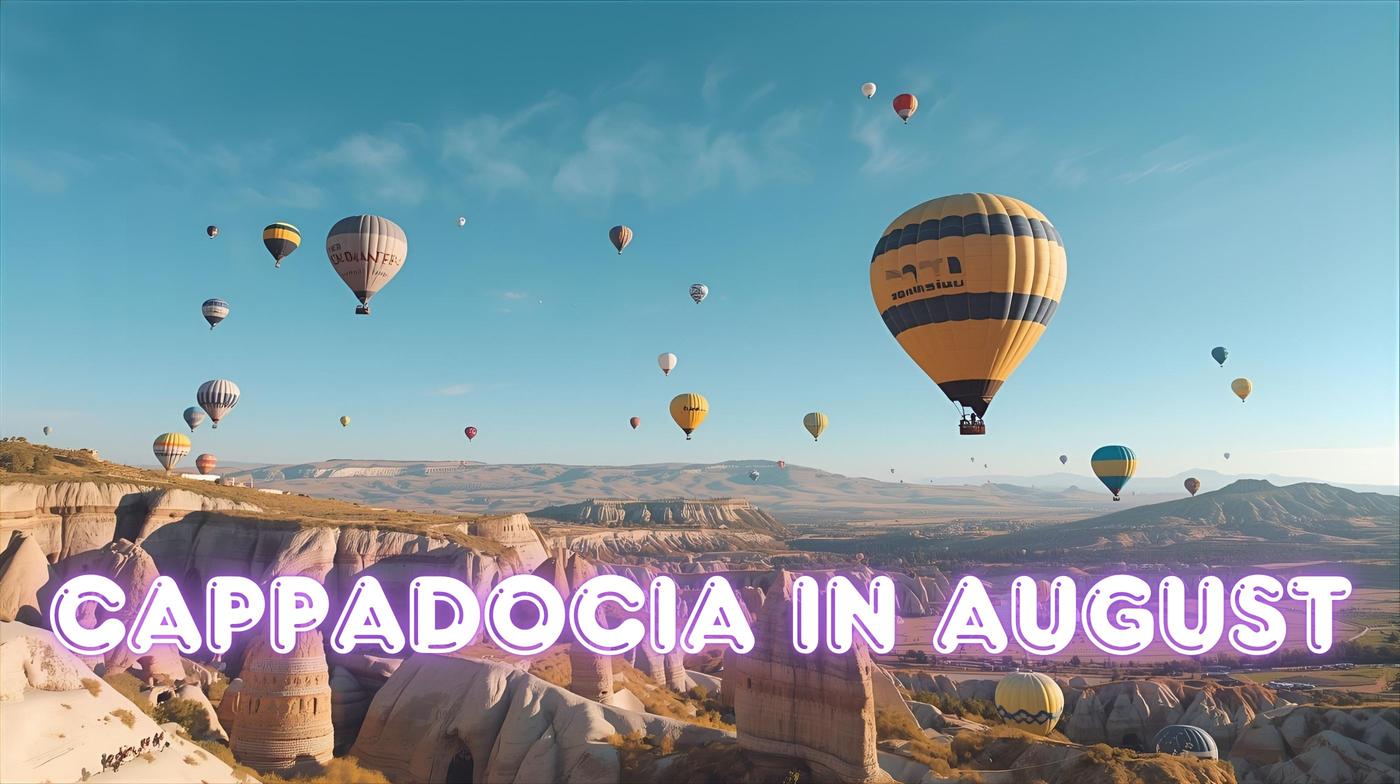
We set our alarms for 4:15am — which felt criminal — and were picked up by our operator in a minibus that smelled strongly of thermos coffee and sleepy strangers. By the time we reached the launch site, the sky was still dark and the balloons were already being inflated across the field, enormous glowing orbs in the pre-dawn black. The burners roar when they fire — a deep, industrial blast of heat you feel from twenty meters away — and then the envelope fills and the whole thing becomes impossibly gentle. We lifted off at the exact moment the sun broke the horizon. Below us, the fairy chimneys caught the first light and turned gold. A few of us are not criers. A few of us were crying. The silence between burner blasts is total. You can hear roosters in the villages below. A standard flight runs roughly $150 to $250 USD per person depending on the operator and whether it includes a champagne toast on landing — which, yes, at 7am, you will absolutely want.
The Valleys Are Not Just Background for Your Balloon Photos
We say this because it's easy to come to Cappadocia, tick off the balloon ride, and assume the job is done. It isn't. The valleys demand your legs. Rose Valley, Love Valley, and Pigeon Valley are all hikeable and all wildly different — Rose Valley rewards you with that otherworldly pink-rock geology and cut-in cave churches; Love Valley is where the fairy chimneys are most dramatic and phallic (the kids in our group thought this was the funniest thing that has ever happened); Pigeon Valley connects Göreme to Uçhisar and is the easiest walk of the three, lined with dovecotes carved into the cliffs. We hiked in the morning before 10am because the August sun by noon is not messing around. Wear real shoes. Drink more water than you think you need. The trails are not always marked.
For a completely different pace, hire a driver for a day and let them take you to Kaymakli or Derinkuyu, then swing through the Ihlara Valley — a green river gorge that feels almost disorienting after days of arid rock landscape. Our driver, who had opinions about everything and delivered them regardless of whether we asked, was easily the best $60 we spent all week.
You Will Eat Very Well Here
We need to talk about Testi Kebab. This is a slow-cooked lamb and vegetable stew sealed inside a clay pot and cooked for hours, and when it arrives at your table, the waiter cracks the pot open tableside with a small hammer. The sound — a sharp ceramic crack, then a rush of steam and the smell of slow-cooked meat — is one of the best things that has ever happened to us in a restaurant. We ordered it three times across different restaurants because we could not stop chasing that first experience. At a good local place in Göreme, this will cost you less than 15 USD and it will ruin you for normal food for a week.
Gözleme — the hand-rolled savory pastry stuffed with spinach, white cheese, or minced meat — is best bought from the women who make them fresh at the Avanos market, cooked on a wood-fired griddle until the edges are crisp and slightly charred. We ate them standing up, burning our fingers, and considered it a perfect lunch. Turkish Delight here bears approximately no resemblance to the processed tourist version sold at airport shops. Get it from a proper confectioner in Ürgüp or Avanos, try the pomegranate and pistachio variety, and prepare to reassess everything you thought you knew about the subject.
If you want to go deeper, a half-day cooking class is genuinely fun and not at all touristy-awkward — the ones run out of family homes where you're actually in someone's kitchen, learning to make meze and stuffed peppers, are worth every lira.
Evenings and Culture: What's Actually Worth Your Time
The Whirling Dervish ceremony — the Sema — is a Sufi spiritual ritual, and it is not a dinner show. Attending a proper ceremony, rather than a hotel-lobby approximation, requires a bit of research into which venues host legitimate performances. When you find one, sit quietly and treat it accordingly. The movement of the dervishes — white robes slowly turning, arms extended, faces serene — is hypnotic in a way that is hard to explain without sounding dramatic. We're going to sound dramatic: it was one of the most quietly moving things we watched on the entire trip.
The folk music and dance performances at the cave restaurants are a mixed bag — some are genuinely wonderful, others feel like they were assembled from a tourism checklist. Ask your hotel which ones they actually recommend rather than which ones pay referral commissions. Your hotel, assuming you chose a good one, will tell you the truth.
Where to Sleep: Cave Hotels Are Worth the Hype
Staying in a cave hotel is not just a gimmick. The thick tuff rock walls act as natural insulation, meaning that in August — when the outside temperature can hit 35°C by early afternoon — your room stays genuinely cool without needing the air conditioning on full blast. We stayed in a mid-range cave hotel in Göreme with a carved stone room, a small terrace, and a breakfast spread that made getting up at 7am feel like a reasonable lifestyle choice: white cheese, olives, tomatoes, cucumber, fresh bread, eggs, honey, clotted cream. All of it. Every morning.
Options range from basic but charming pensions for around $50 a night all the way up to boutique properties with infinity pools cut into the cliffside and rooms with private terraces overlooking the valley. If you're going to splurge anywhere on this trip, the accommodation is the right call — you'll spend more time appreciating it than you expect.
Getting There and Getting Around
Most people fly into either Kayseri (ASR) or Nevşehir (NAV) airports, both of which have regular connections from Istanbul. The overnight bus from Istanbul is also an option if you have the time and the philosophical resilience — it's a ten-hour ride and the air conditioning is always either broken or set to Arctic. We took the bus once as an experiment. We flew back.
Within Cappadocia, renting a car gives you the most freedom, but the roads around the valleys are genuinely confusing and parking near the trailheads is chaos in August. A combination of hired drivers, group day tours for the underground cities, and your own feet for the valley hikes covers almost everything without the headache. Some people rent ATVs or scooters, which looks incredibly fun until you see the road conditions and reconsider your insurance situation.
On Budget: What This Trip Actually Costs
Cappadocia is not a cheap destination by Turkish standards, but it's still exceptionally good value compared to most European summer trips. The balloon ride is your biggest single expense — budget $150 to $250 USD and do not cheap out on the operator. Read reviews, check safety records, and pay the extra $30 for a reputable company. Underground city entrance fees run around 15 USD each. A solid lunch in a local restaurant is $8 to $12. Cave hotel accommodation at a decent mid-range property runs $80 to $150 per night in August. A private driver for a full day is $50 to $80 and genuinely transforms the experience. All in, a five-night trip done well — balloon ride, valley hikes, underground cities, good food, a proper cave hotel — lands somewhere around $1,200 to $1,800 per person depending on your choices. For what you get, it feels like an absurdly good deal.
Cappadocia in August is hot, busy, occasionally chaotic, and completely unforgettable. The landscape earns every breathless description ever written about it. The food earns its own trip. The balloon ride will ruin every other sunrise you ever watch from the ground. Go. Book early. Bring sunscreen. Set the alarm.
Is August actually a good time to visit Cappadocia, or is it just hype?
It's genuinely one of the best months to go, and not just for the Instagram reasons. The atmospheric stability in August means balloon flights have the highest launch success rate of any month — operators we spoke to said their August cancellation rate due to weather was under 10%. The trade-offs are real: it's the hottest and most crowded month, and prices are at their peak across accommodation and tours. If you hate crowds, consider late September when the weather is still excellent and the crowds thin noticeably. But if your priority is maximizing the chance of that balloon ride actually happening, August is your month. Just book everything — flights, hotels, balloon rides — at least six to eight weeks in advance. Some popular balloon operators fill their August slots months out.
How much does a hot air balloon ride cost in Cappadocia, and how do I not get ripped off?
Expect to pay between $150 and $250 USD per person for a standard flight, which typically runs 60 to 90 minutes and includes hotel pickup and a champagne toast on landing. The price difference between operators is usually about the equipment, the pilot experience, and the group size — smaller baskets mean a better experience and cost a bit more. Do not book the cheapest option you can find. Read reviews on TripAdvisor and Google, look for operators certified by the Turkish Civil Aviation Authority (SHGM), and ask specifically about the age and maintenance history of their balloons. Kapadokya Balloons and Royal Balloon are both reputable names we'd trust. A flight being cancelled due to wind is genuinely common — most operators will rebook you for the following morning, which is why a flexible schedule matters.
Are cave hotels actually comfortable in August, or is it a novelty that wears off?
They are legitimately one of the more comfortable places to sleep in Turkish summer heat. The volcanic tuff rock that forms the walls and ceilings acts as a natural thermal regulator — the temperature inside barely moves regardless of what's happening outside. We slept better in our cave room in 35°C August heat than we do in most hotel rooms in milder climates. The quality range is enormous though: at the low end you have basic, clean, charming rooms for around $50 a night; at the high end there are genuinely stunning boutique properties with carved stone suites, private terraces, and cliffside pools that run $200 to $400 a night. The Göreme and Uçhisar areas have the best concentration of options. Read recent reviews specifically for cleanliness and water pressure — the plumbing in some older cave properties can be eccentric.
What food should I absolutely not leave Cappadocia without eating?
Testi Kebab is non-negotiable — find a restaurant in Göreme or Ürgüp that makes it traditionally and order it. The tableside pot-cracking moment alone is worth the trip. Beyond that: Gözleme from the Avanos market, made fresh while you watch; meze spreads with muhammara (red pepper and walnut paste) which is a regional specialty you don't find as commonly elsewhere in Turkey; and a proper Turkish breakfast, which in a good cave hotel will involve ten to fifteen small dishes and take you an hour to work through. For sweet things, get your Turkish Delight from an actual confectioner rather than a souvenir shop — the texture and flavor are in a completely different category. If you want to understand where all of this comes from, a half-day cooking class run out of a local home is one of the best value experiences in the region.
How do I actually get around Cappadocia without losing my mind?
The honest answer is a combination of strategies. For the underground cities (Derinkuyu and Kaymakli), join a guided group tour or hire a private driver — the sites are 30 to 40 minutes from Göreme by road and not accessible on foot. For the valleys — Rose, Love, Pigeon — you walk, full stop. They're best explored on foot and the hiking is genuinely the point. For getting between towns like Göreme, Ürgüp, Uçhisar, and Avanos, local dolmuş minibuses run regularly and cost almost nothing, but the schedules require patience. Renting a car gives you total freedom but August parking near popular trailheads is legitimately chaotic — factor that in. ATV tours are available and popular; we've done them and they're fun but more of a novelty than a serious way to see the landscape. Our honest recommendation: hire a local driver for at least one full day ($60 to $80), walk the valleys yourself, and use taxis or dolmuş for everything else.
Is Cappadocia a good destination for families with children?
Better than you might expect, with some caveats. The balloon ride has a minimum age requirement that varies by operator — typically around six years old — and the experience of being in an open basket several hundred meters above the ground is not for every child. The underground cities are brilliant for older kids who can handle tight spaces and low ceilings; Kaymakli tends to be slightly less claustrophobic than Derinkuyu and is a better starting point. Pottery workshops in Avanos are a genuine hit with children of almost any age — the Avanos pottery tradition is centuries old and the local craftspeople are patient teachers. Valley hikes are manageable for kids who are comfortable walking several kilometers on uneven terrain. The cave hotels, unexpectedly, tend to be a huge hit with children who treat the whole thing like sleeping inside a castle.
What should I actually pack for Cappadocia in August?
Light, breathable clothing is the obvious answer — linen or moisture-wicking fabrics will serve you far better than cotton in 35°C heat. A wide-brimmed hat and high-SPF sunscreen are not optional; the August sun in central Anatolia is serious and the open valleys offer almost no shade between roughly 10am and 4pm. Comfortable, broken-in walking shoes with ankle support are essential for the valley hikes — the terrain is rocky and uneven and sandals will destroy you. For the balloon ride, bring a light jacket or fleece layer regardless of the daytime forecast: the pre-dawn temperature at the launch field is often 10 to 15 degrees cooler than the afternoon high, and standing in an open basket at altitude adds another dimension of chill. A good camera or a phone with a strong camera is worth the bag space. An unlocked phone with a Turkish SIM card (available at the airports for around $10) will make navigation and translation dramatically easier than relying on international roaming.