Beyond Carnival: A Step-by-Step Brazil Travel Guide for Unforgettable Journeys
Beyond Carnival: A Step-by-Step Brazil Travel Guide for Unforgettable Journeys
4 min read
Beyond Carnival: Our Honest, Story-Drenched Brazil Travel Guide
Let's get one thing straight: Brazil is not a country you can summarize. We've tried. We've sat in airport lounges, scribbled in notebooks on overnight buses, and argued over caipirinhas about the best way to explain what it feels like to stand at the edge of the Amazon at dusk, the air so thick with heat and humidity it feels like breathing through a warm, wet towel. We never get it quite right. But we keep going back, because Brazil is the kind of place that gets under your skin in a way that ruins you for lesser destinations.
This guide isn't going to tell you Brazil is "vibrant" — that word does absolutely nothing for anyone. Instead, we're going to tell you that the street market in Fortaleza smells like tamarind and frying fish and something floral we still haven't identified, that Rio at 2am sounds like a city that genuinely doesn't understand the concept of tomorrow, and that the Amazon will make you feel, deeply and suddenly, like a very small animal. That's Brazil. Let's go.
When to Actually Go
The honest answer is: it depends which Brazil you want. The country is bigger than the continental United States, which means the weather across its regions operates on entirely different schedules and doesn't particularly care about your holiday plans. We went during the southern winter — May through September — and found the cooler, drier air in Rio and São Paulo almost suspiciously pleasant. Hiking up to Cristo Redentor without sweating through our shirts entirely felt like a minor miracle.
Your Key to Effortless Travel
Meet Travelfika
Planning a trip should be exciting, not exhausting—and that's where Travelfika comes in! With our smart AI-powered tools, insider tips, and seamless planning features, we make travel easier than ever.
Whether you're crafting the perfect itinerary, discovering hidden spots, or getting real-time recommendations, Travelfika has your back. No more endless research or last-minute stress—just smooth, effortless travel planning tailored to you. So go ahead, dream big, explore more, and let Travelfika handle Read More
Planning a trip should be exciting, not exhausting—and that's where Travelfika comes in! With our smart AI-powered tools, insider tips, and seamless planning features, we make travel easier than ever.
Whether you're crafting the perfect itinerary, discovering hidden spots, or getting real-time recommendations, Travelfika has your back. No more endless research—just smooth, effortless travel planning tailored to you.Read More
Planning a trip should be exciting, not exhausting—and that's where Travelfika comes in! With our smart AI-powered tools, insider tips, and seamless planning features, we make travel easier than ever.
Whether you're crafting the perfect itinerary, discovering hidden spots, or getting real-time recommendations, Travelfika has your back.Read More
Planning a trip should be exciting, not exhausting—and that's where Travelfika comes in! With our smart AI-powered tools, insider tips, and seamless planning features, we make travel easier than ever. Read More
Planning a trip should be exciting, not exhausting— and that's where Travelfika comes in! With our smart AI-powered tools, insider tips, and seamless planning features. Read More
The north — Manaus, the Amazon, that whole vast green cathedral — operates on its own rules. December through March is the rainy season up there, and "rainy" is doing some heavy lifting as a descriptor. It rains the way Brazil does everything: loudly, enthusiastically, and at length. The upside is that the river levels are higher, which means you can get deeper into jungle areas by boat. The downside is that you will be wet. Just accept it.
If Carnival is your thing, February is your month, mostly centered on Rio and Salvador. We won't talk you out of it — it is genuinely one of the most overwhelming spectacles of collective human joy any of us have ever witnessed — but go in knowing that hotel prices triple, the city's infrastructure gets stress-tested, and personal space becomes a theoretical concept for about ten days.
Getting There Without Losing Your Mind
Flying into Brazil means landing in São Paulo's Guarulhos or Rio's Galeão, both of which are large, occasionally chaotic, and entirely navigable once you've done it once. Direct flights from North American hubs — New York, Miami, Los Angeles — run regularly to both, and we'd generally recommend flying into whichever city you want to start in rather than backtracking. We once flew into São Paulo intending to immediately take a domestic connection to Manaus and spent three hours watching our flight board update with increasingly optimistic departure times. Pack patience.
Once you're inside Brazil, domestic flights are genuinely the move for covering serious distance. The country is enormous, and the romantic notion of a cross-country bus journey fades quickly when you realize that Rio to Manaus by road is approximately the same as driving from New York to Los Angeles — twice. LATAM and Gol are the main carriers, and booking ahead gets you decent fares. For shorter hops between coastal cities, though, the overnight bus network is surprisingly comfortable and, honestly, a great way to wake up somewhere new.
The Cities: What We Actually Think
Rio de Janeiro is every cliché you've heard about it, and somehow the clichés still don't prepare you. The mountains drop straight into the sea in a way that seems architecturally irresponsible. Copacabana and Ipanema are genuinely beautiful beaches, although by mid-morning they are absolutely packed with people, vendors selling everything from beer to sunscreen to fresh coconuts, and the occasional hang glider landing with theatrical flair on the sand. We rented bikes and rode the coastal path at 7am, before the crowds arrived, and that hour — cool air, empty promenade, the Atlantic catching morning light — is one of our favorite travel memories, full stop.
When the sun goes down, head to Lapa. The neighbourhood transforms into something that defies easy description: live samba spilling out of every doorway, street food vendors doing brisk business in pastéis and coxinhas, people dancing on the cobblestones like they were put on earth for exactly this purpose. We stayed until 3am on our first night and couldn't tell you where the time went.
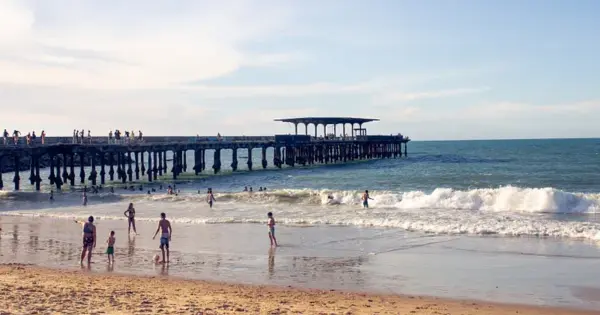
Fortaleza is one of those cities that doesn't show up on enough itineraries, and we find that criminal. The beaches here — particularly Praia do Futuro — are long, golden, and significantly less crowded than anything in Rio. The historic centre has a worn, working-city energy that we prefer to the more polished tourist zones elsewhere: tile-fronted buildings, a covered market that smells magnificently of dried shrimp and leather goods, and a cathedral that's more impressive inside than its modest exterior suggests. The nightlife district around Praia de Iracema gets loud and lively by 10pm, and the local forró music — faster and more physical than samba — will have you attempting dance moves you have no business attempting.
Manaus should feel like it has no right to exist. A city of two million people dropped in the middle of the Amazon basin, historically built on rubber boom money, now the gateway to one of the most biodiverse ecosystems on the planet. The famous meeting of the waters — where the dark, tannin-rich Rio Negro runs alongside the sandy-coloured Amazon for kilometres without mixing, due to differences in temperature and density — is one of those things you have to see to believe. We took a boat out at dawn, the air already thick and warm, and watched the two rivers run side by side like they were having an argument they'd been having for centuries.
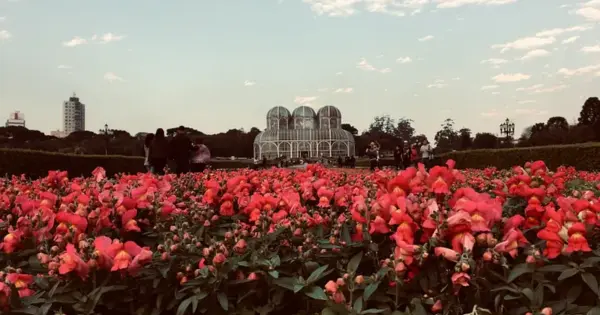
Curitiba is the surprise on this list — a planned, relatively orderly city in the south that operates with an efficiency that can feel almost startling after the beautiful chaos of the rest of Brazil. The Wire Opera House (Opera de Arame) — a steel-tube and glass structure set beside a lake in a former quarry — is genuinely one of the more remarkable pieces of architecture we've encountered anywhere, not because it's grand but because it's strange and confident and utterly its own thing. Curitiba won't give you the heart-racing highs of Rio or the jungle drama of Manaus, but after a few weeks of sensory overload, its quieter pleasures feel like exactly what the doctor ordered.
The Amazon: Go Deep or Don't Bother
If you're going to the Amazon — and you should — don't just tick Manaus off a list and fly home. Get on a boat. Get into the forest. One of the most distinctive ways to do this is staying at Ariau Towers, perched on the banks of the Amazon River and accessible only by water. It's the kind of place that exists in its own surreal category: elevated walkways threading through the canopy, howler monkeys using the rooftop as a thoroughfare at 5am, the smell of the river — mineral, dark, alive — coming through the screens at night. It's not cheap, but it's not a hotel in any conventional sense either. It's an experience that recalibrates your sense of what the natural world is capable of.
Back in Rio, the Tijuca Forest deserves more credit than it usually gets from visitors who treat it purely as the backdrop for a photo of Christ the Redeemer. It's one of the largest urban rainforests in the world, and hiking its trails — past waterfalls, through canopy so dense the light turns green — feels nothing like being in a city. The Corcovado summit, where Cristo stands with his arms open in that famous gesture, is genuinely moving in person in a way that surprises people who thought they were immune to famous landmarks. Go early, before the tour buses arrive. The silence up there, with the city spread out below and the Atlantic beyond, is worth every early alarm.
Where We Slept (And Actually Liked It)
In São Paulo, Villa Bebek Hotel gave us exactly what you need after a day of navigating Latin America's largest city: quiet rooms, working air conditioning — non-negotiable in the humidity — and minibars stocked with cold Antartica beer. It's not sprawling or showy, just 28 rooms run with genuine care, the kind of place where the staff remember your coffee order by day two.
For a completely different register, Dpny Beach Hotel on Ilhabela is the place to splurge if beaches are your primary motivation for the whole trip. Eighty-eight rooms, all done with the kind of tasteful restraint that actually lets the ocean view do the work. The laundry service is — we know this sounds like a strange thing to mention — genuinely excellent, which matters more than you'd think after a week of swimming and hiking and generally destroying your clothes with sand and sunscreen.
Visas and Money: The Practical Stuff, Quickly
Most nationalities can now obtain a Brazilian tourist e-visa online before departure, which takes considerably less effort than it used to and doesn't require a single embassy queue. Check the Brazilian government's official consular portal for current requirements based on your passport — the rules have shifted in recent years and vary by country. You get 90 days, which sounds like a lot until you're deep in the Amazon and realise you've been there three weeks already.
The currency is the Brazilian Real, and it's been reasonably stable since its introduction in 1994, which is a sentence that means something in South American economic history. Credit cards are widely accepted in cities and tourist areas, but carrying some cash for markets, smaller restaurants, and anywhere outside the major urban centres is genuinely useful. We stuffed ourselves with coxinhas and açaí bowls for what amounted to pocket change by any European or North American standard — not because we were hunting for deals, just because that's what good street food costs here.
What to Pack (And What to Leave Behind)
Brazil's dress code is essentially: practical during the day, slightly more effort at night if you feel like it. We packed lightweight shorts and shirts for everything from beach days to city walking, a pair of proper hiking shoes for any trail time (flip flops are fine for Ipanema, not fine for Tijuca Forest), and one or two things we could dress up for a nice dinner or a night in Lapa without looking like we'd come straight from the airport. The key piece of kit we'd push hardest: a good dry bag for anything going on boats, and insect repellent of genuine strength for anywhere near the Amazon. The mosquitoes there are not playing around.
Sunscreen goes without saying, and go high-SPF. The Brazilian sun at midday, particularly in the northeast, operates at a level that should be taken seriously by anyone who underestimates it. We've watched people turn impressively pink by noon on Fortaleza's beach despite their best intentions.
Brazil is too large and too alive to be reduced to a checklist. Every time we think we've got a handle on it — on the tempo of its cities, the scale of its landscapes, the warmth and directness of its people — it surprises us again. Go with time, go with curiosity, and go with a willingness to follow the sound of music down an unfamiliar street at midnight. That's usually where the best stories start. Boa viagem.
What is the best time of year to visit Brazil?
Honest answer: it depends entirely on which part of Brazil you're going to, because the country is so large that generalizing is almost useless. For Rio, São Paulo, and the south, May through September is the sweet spot — cooler, drier, and far more comfortable for exploring on foot. The Amazon and the northeast are year-round propositions, though the heavy rains in the north from December through March mean rivers run high and some jungle areas are more accessible by boat. If Carnival is the goal, February puts you in Rio or Salvador at exactly the right time — but book accommodation months in advance and brace yourself for the crowd.
Do I need a visa to visit Brazil?
Many nationalities — including US, EU, UK, Canadian, and Australian passport holders — can now apply for a Brazilian tourist e-visa online before traveling, which is a significant improvement over the old system. The process is done through Brazil's official consular portal and typically takes a few business days. It's worth double-checking the current rules for your specific passport before booking, since visa policy has changed several times recently. Once approved, you get 90 days in the country, which goes faster than you'd expect.
Is Brazil safe for tourists?
We're not going to give you the sanitized travel-guide answer here. Brazil has areas of genuine safety concern, and pretending otherwise does nobody any favors. That said, the vast majority of tourist areas — the beaches of Rio and Fortaleza, the Amazon lodges, Curitiba, Iguazu — are places we've moved around in comfortably with basic precautions. Those precautions are: don't flash expensive gear, don't get your phone out at street level in unfamiliar neighborhoods after dark, use reputable taxis or apps like 99 or Uber rather than flagging random cabs, and read up on the specific areas of any city you're visiting. Travel insurance is non-negotiable.
What is the currency in Brazil and should I bring cash?
Brazil runs on the Real (BRL), and it's been stable enough since 1994 that you don't need to panic about currency fluctuation the way you might in some other South American countries. Credit cards work fine in most urban restaurants, hotels, and shops. But carry cash — actual notes — for markets, street food, smaller towns, boat trips, and really anything outside the tourist-infrastructure bubble. ATMs are widely available in cities. We'd suggest arriving with a small amount of local currency already in hand, just to avoid the scramble on arrival.
How do you get around Brazil between cities?
Fly, if the distance is significant. We cannot stress this enough: Brazil is enormous, and the romantic notion of long-haul bus travel across the country is one that tends to collapse somewhere around hour twelve on the road. LATAM and Gol cover domestic routes well and advance booking keeps prices reasonable. For shorter coastal hops — say, Rio to Búzios, or hopping between northeastern beach towns — overnight buses are genuinely comfortable and a legitimate option. In cities, Uber and 99 (the Brazilian equivalent) are reliable, cheap, and far easier than navigating local bus systems on day one.
What should I eat in Brazil that isn't just Carnival food stereotypes?
This is our favorite question. Skip the tourist-trap churrascarias for a moment and eat where locals eat. Açaí bowls in the Amazon are nothing like the Instagram versions you've had at home — they arrive thick, dark purple, almost savory, served with tapioca and granola. Coxinhas (fried chicken croquettes) from a padaria bakery will cost you almost nothing and are deeply satisfying. In Bahia, the Afro-Brazilian cuisine — moqueca (coconut fish stew), acarajé (fried black-eyed pea fritters served on the street) — is some of the most interesting food in the country. And for the love of everything, drink fresh coconut water straight from the coconut on any beach, any time of day. It tastes like the beach smells. It's perfect.